Where to begin?
A few days before the ceremony. The outfit, obviously.
What top to go with my kilt?
A white blouse? Too traditional.
A black shirt? Not enough colour.
A light brown, fun patterned something I’ve never seen before, found in a second-hand shop I’ve never before been. Perfect!
I hadn’t let the thought cross my mind that I could potentially be awarded the Fellowship until the evening of, when I walked from the hotel to Kings Place. Alone but not lonely, amongst the almost recognisable faces of Kings Cross, I blasted my music to get into the celebratory spirit, feeling grateful to be shortlisted. The strongest bodily sensation I can remember is having extremely sweaty palms. I wondered if the brown pattered something was the right choice. What if I sweat through that too?… and what if I walk home tonight with a life-changing Fellowship?
One year later, I can share with you that it has certainly changed my life. For the first time since I started working in Marco’s Ice Cream Shop at thirteen years old I feel relatively financially stable. And for the first time since graduating in 2017, I have my entire year (2026) planned out ahead of me; choreographing, performing, producing, movement directing and manifesting new projects.
2025 was incredible.
Firstly, before speaking of any artistic endeavours, I want to acknowledge that the Fellowship enabled me to practically survive and pay my bills, which in turn allowed me to use my time in entirely new ways. This shift in perspective made it possible to look further into the future than I had previously been able to. Artists often live precariously, waiting on governments to fund arts bodies that may, in turn, support them. The generosity of the Fellowship gave me the rare opportunity to reflect on my practice outside the pressure of funding deadlines, in ways I couldn’t have imagined before. Additionally, receiving recognition from three such influential figures in the industry gave me a renewed sense of hope—that the power of dance, even work that is sometimes strange or unconventional, can help soften the impact of the turbulent times we are living through.
In almost all my choreographic works so far, I have been trying to contextualise my competitive childhood experiences of Highland Dance, and how I feel this traditional form is still under-documented, under-explored and constrained within its own rules. The Fellowship allowed me time to conjure, write and apply for a year-long project researching the history, gender, elitism, and access of Scottish Highland Dance. Drawing on dance and performance studies, feminist and queer theory, post-colonial and decolonial scholarship, phenomenology of the body, and critical archival practice, the year-long project combines embodied experimentation, research, creative documentation and reflection. my body is my home: Embodied Heritage and the Future of Highland Dance is something I would not have been able to create if it had not been for the Fellowship. My hope is that this research contributes to the transformation of the tradition, and provokes the relationship Highland has to the military, the royalty and Britain’s colonial past.
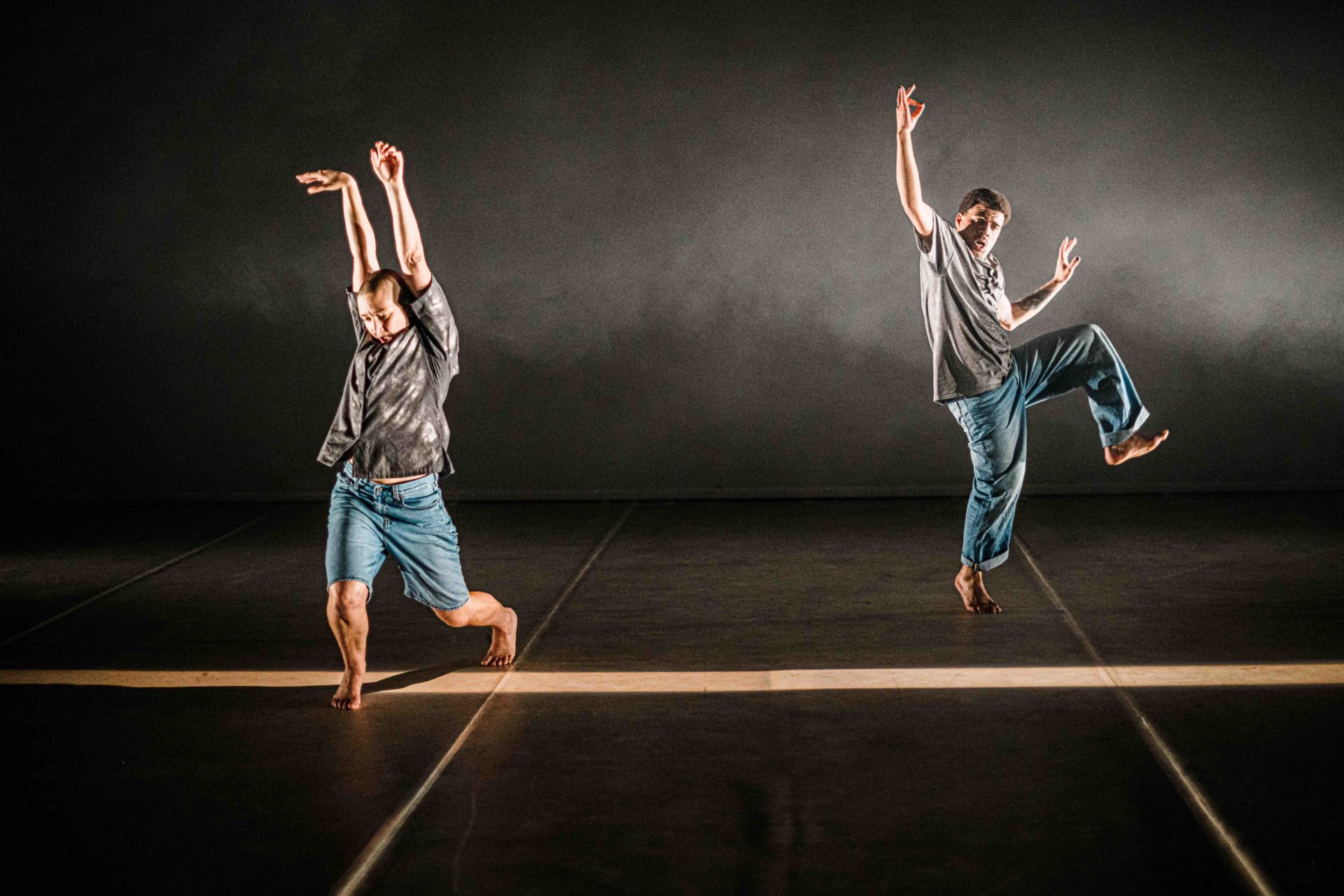
With the Fellowship, I was also able to focus on developing my personal skills. I flew to Belfast for the first time to take a workshop with Oona Doherty and Michael Keegan Dolan to simply practice dancing. I also exchanged skills with drag artist and performer Jay Yule, having a week together to pingpong new ideas was refreshing, necessary and worthwhile. I also made new connections and networks thanks to the Fellowship. I was asked to present a short excerpt of my work, Futuristic Folktales and join a panel discussion ‘Folk Dance: For and of the People’ at Southbank Centre in summer 2025. The discussion was hosted by writer of Finding Albion Zakia Sewell. and conversations with Zakia after, encouraged me to believe I could one day write a book about Highland Dance. This is where the inspiration for the year-long research project began. I look forward to what will flourish out of the project.
I’ve also been able to delve deeper into aspects of my creative practice that were already there but hadn’t quite reached the surface yet, including bodies as sites of cultural shaping and the examination of how culture is co-opted politically and who is included/excluded from that. During the residency at Hawkwood House, courtesy of the Arts Foundation, I was able to further consider care, cyclical thinking, temporality, menstruality and recovery within my practice as anti-capitalistic frameworks. I’ve also begun connecting deeply – alongside Germaine Sollberger from Posthelvetia – with the ethics and consciousness of curating vs. creating folk culture, and what that means for the future of folk and the future of nostalgia. We do this through anthropological research as well as reinventing, misremembering and reclaiming folk practices. Spending more time with the aspects of my creative practice mentioned above has allowed me to cultivate my artistic identity and reflect on my contribution within the sector.
Overall, having the time granted by the Fellowship to reflect, regenerate and imagine new futures has been unimaginable and I am eternally grateful for the opportunity, connections, confidence and support it has so kindly given.